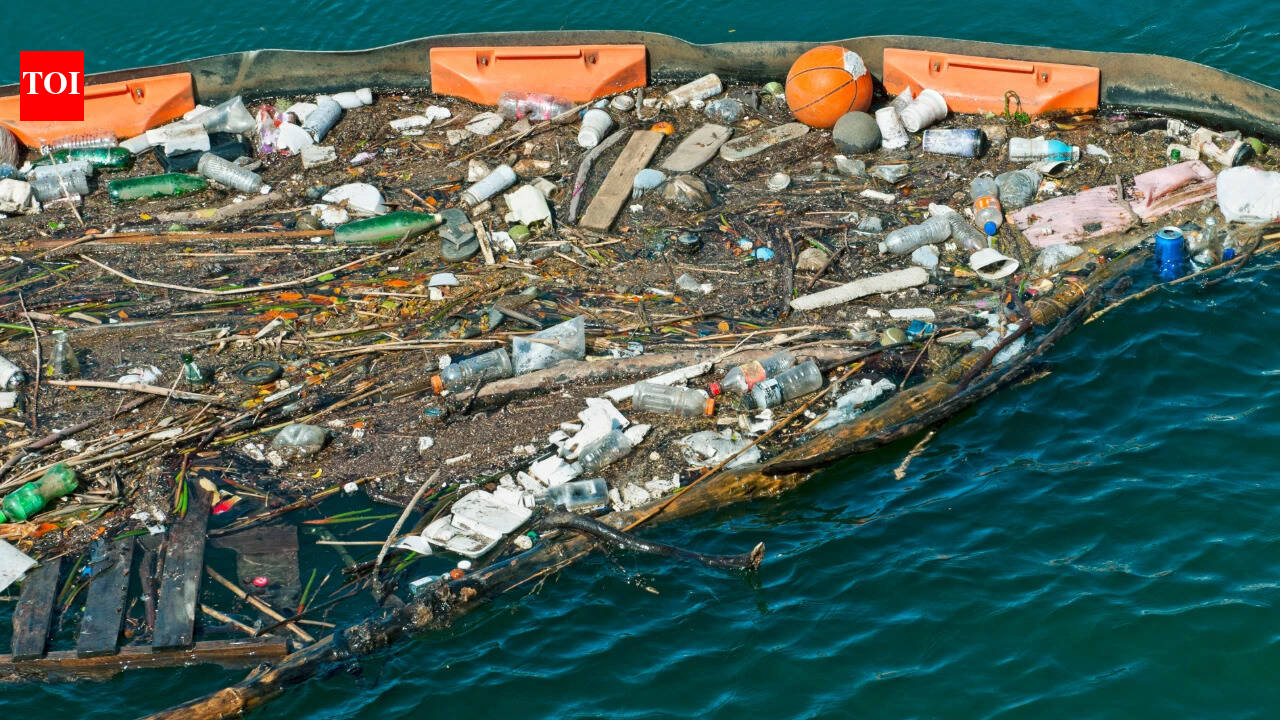
Researchers at the University of Bergen in Norway have discovered that microplastics in the Great Pacific Garbage Patch may be causing a blue-green tint in the ocean. The study, published in Communications Earth & Environment, suggests that these tiny plastic particles are altering how sunlight scatters across the ocean due to their light-absorbing and scattering properties.
The North Pacific Ocean's garbage patch, located within a slow-moving gyre current system, has been found to contain mostly microplastic fragments (94%) that account for only about 8% of its weight. The researchers compared the properties of these microplastics with those of natural materials in seawater, such as phytoplankton and minerals, and their models suggested that the effect could show up at concentrations similar to those in the patch.
When analyzing satellite records from 2002 to 2022, they found a small but statistically significant brightening in blue and green wavelengths near the patch, with the water taking on a gradually intensifying cyan tint over the years. While several factors can affect the ocean's appearance, such as phytoplankton making it greener or mineral dust brightening coastal waters, their research indicates that microplastics are the strongest explanation for this color shift.
The researchers emphasized that their findings do not conclusively prove that microplastics are responsible for the color change but hope to take optical measurements of seawater samples from inside the patch to confirm their hypothesis. To prevent microplastic pollution, they advocate preventing it from entering the water in the first place as removal remains a challenge due to the tiny size of these fragments.