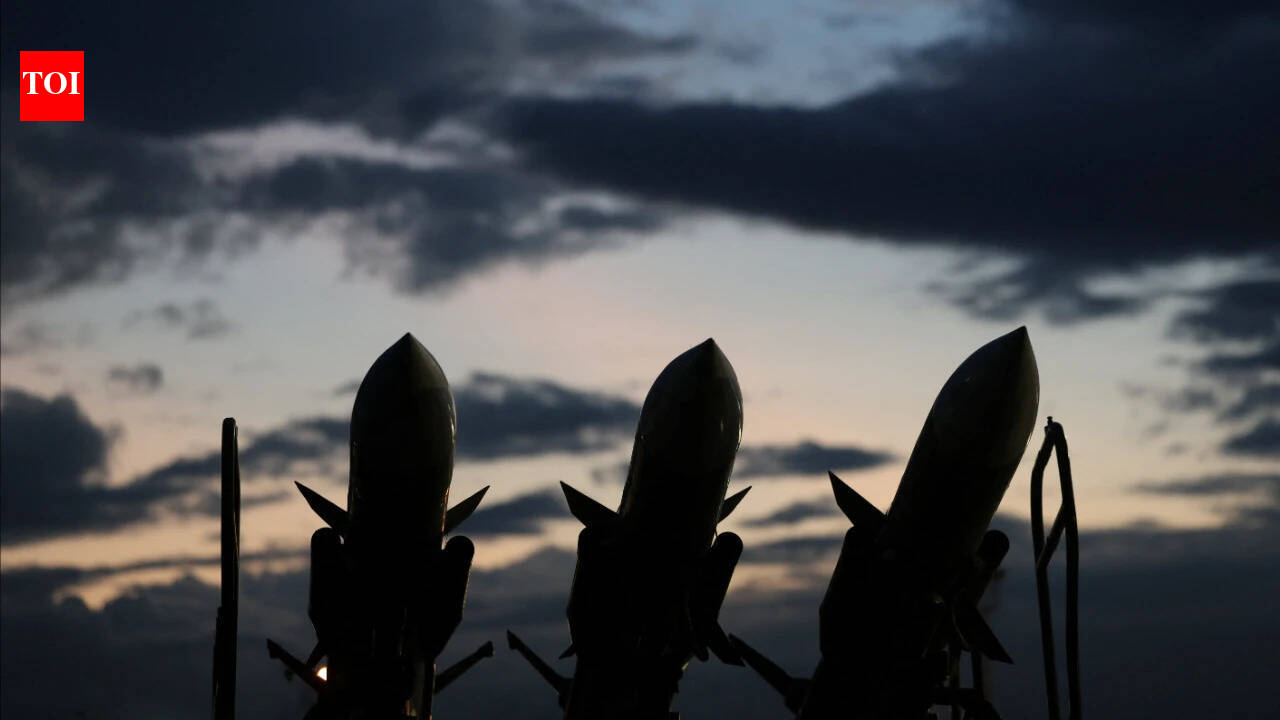
Iran has unveiled a vast underground military facility, showcasing its ballistic and cruise missiles during the Islamic Revolutionary Guard Corps (IRGC) Aerospace Week. The facility, described as a new 'missile city', was revealed at an event attended by high-ranking military officials, with footage displaying long rows of missiles stored inside tunnels. Iran claims that the complex houses several types of ballistic and cruise missiles, including the Fattah, allegedly a hypersonic missile, and the long-range Khorramshahr. The facility's location, number of weapons, and operational capabilities remain unconfirmed.
IRGC Aerospace Force commander Brig Gen Seyyed Majid Mousavi issued a warning to Iran's adversaries, stating that they would respond to threats across the region and beyond if necessary. Armed Forces Chief of Staff Maj Gen Ali Abdollahi praised Iran's missile crews and claimed that the U.S. had failed to weaken the country despite deploying advanced weapons. Iranian political leadership has also issued similar warnings, with Mohsen Rezaei urging Washington to accept Iran's conditions for ending the conflict.
The unveiling of this underground facility is intended to demonstrate Iran's ability to preserve its missile capabilities under sustained military pressure and to make them harder to locate and destroy. The IRGC spokesman has previously stated that Iran has shifted its missile and drone manufacturing lines from surface locations to underground complexes, dubbing them as 'missile production cities'. However, the extent of damage caused by earlier strikes and the number of Iranian missiles and launchers still available remain unclear.
This development comes amid ongoing diplomatic efforts to end the conflict, with U.S. President Donald Trump striking a more confident tone about the situation. Trump has said that Iran's military is effectively over, and there is positive momentum behind efforts to end the conflict. Meanwhile, U.S. Secretary of State Marco Rubio argues that economic pressure is affecting Tehran, stating that Iran needs money for its nuclear program and supporting groups such as Hamas, Hezbollah, and Shia militias. The economic pressure has also affected ordinary Iranians with rising prices and inflation adding to their difficulties.