President Donald Trump is facing a potential military stalemate in his eight-month conflict with Iran, reminiscent of the Kissingerian maxim he may have learned from Henry Kissinger's 1969 essay on the Vietnam War. In a White House briefing on November 9, Trump declared that the Iran war was "militarily effectively over," but Iran has persisted, expanding the conflict across West Asia and refusing to surrender. This strategy has secured Tehran a Kissingerian victory, as Trump's efforts to change the regime, dismantle Iran's nuclear enrichment, destroy its missile capabilities, and end support for proxies like Hezbollah have fallen short. The US currently has three carrier strike groups with nearly 200 aircraft in the Indian Ocean region, but these forces are unlikely to achieve any of Trump's objectives. The Iran imbroglio has further complicated Trump's administration, as the November 3 midterm elections saw Democrats take control of both the House and Senate. With a hostile new Congress set to convene on January 3, Trump has only two months to carry out further action. A lengthy post by US Vice President JD Vance attributed the defeat to the Iran War, suggesting that Trump may need to accede to seven preconditions reportedly spelt out in talks between Iran and Qatar in September, including an end to hostilities on all fronts, lifting of naval blockades, withdrawal of US air and naval forces, reparations for war damages, and an end to hostile rhetoric against Tehran.
SUMMARY (CONTINUED):
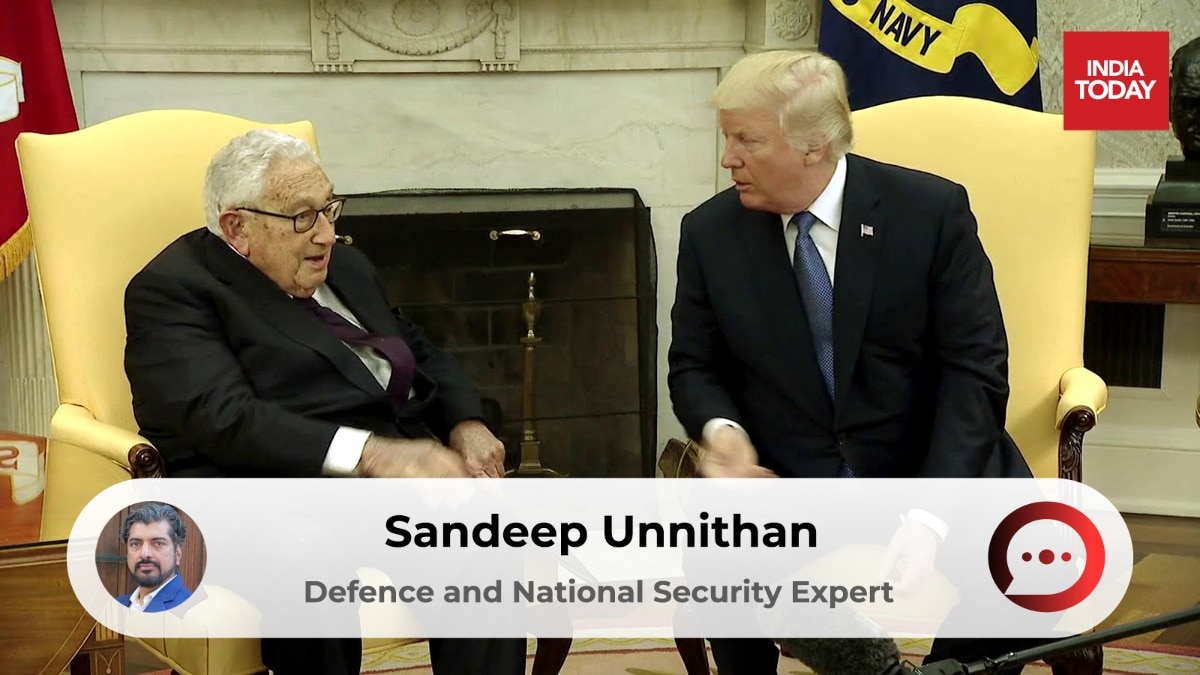
Trump's Iran strategy has been unique in that it opted for military and economic pressure over a land invasion with soldiers on the ground. This means that should the US choose to exit the conflict, there will not be publicly humiliating spectacles like the rooftop evacuation of US nationals in Saigon in 1975 or the chaotic exit from Bagram airbase in 2021. In 2017, Trump welcomed Kissinger into the White House, describing him as an old friend and a "man I have great, great respect for." However, Trump's current situation bears resemblance to Kissinger's career after the 1969 essay-- intensifying the bombing of Hanoi and bombing neighboring Cambodia, and receiving the Nobel Peace Prize in 1973 for ending the Vietnam War, which remains one of the most controversial prizes ever. Trump has publicly hankered for the prize in a way few candidates have, but was overlooked by the Norwegian Nobel Committee twice. Ending the Iran war could give him a third shot at the elusive prize.
SUMMARY (CONTINUED):
The Iran conflict has escalated tensions between the US and Iran, with both nations engaging in hostile rhetoric and military actions. On January 8, 2020, the US assassinated Iran's top military commander, Qassem Soleimani, in a drone strike at Baghdad airport. In response, Iran launched missile attacks on US forces in Iraq. Tensions between the two nations have remained high since then, with both sides accusing each other of violating international law and engaging in provocative actions. The conflict has also had regional consequences, as Iran's allies have responded to US actions by launching attacks against American interests in the Middle East. The ongoing conflict has raised concerns about a potential escalation into a wider war, with both sides showing no signs of backing down.
SUMMARY (CONTINUED):
President Donald Trump is facing a military stalemate in his eight-month conflict with Iran, reminiscent of the Kissingerian maxim he may have learned from Henry Kissinger's 1969 essay on the Vietnam War. In a White House briefing on November 9, Trump declared that the Iran war was "militarily effectively over," but Iran has persisted, expanding the conflict across West Asia and refusing to surrender. This strategy has secured Tehran a Kissingerian victory, as Trump's efforts to change the regime, dismantle Iran's nuclear enrichment, destroy its missile capabilities, and end support for proxies like Hezbollah have fallen short. The US currently has three carrier strike groups with nearly 200 aircraft in the Indian Ocean region, but these forces are unlikely to achieve any of Trump's objectives.
SUMMARY (CONTINUED):
The Iran imbroglio has further complicated Trump's administration, as the November 3 midterm elections saw Democrats take control of both the House and Senate. With a hostile new Congress set to convene on January 3, Trump has only two months to carry out further action. A lengthy post by US Vice President JD Vance attributed the defeat to the Iran War, suggesting that Trump may need to accede to seven preconditions reportedly spelt out in talks between Iran and Qatar in September, including an end to hostilities on all fronts, lifting of naval blockades, withdrawal of US air and naval forces, reparations for war damages, and an end to hostile rhetoric against Tehran. The ongoing conflict has raised concerns about a potential escalation into a wider war, with both sides showing no signs of backing down.
SUMMARY (CONTINUED):
Trump's Iran strategy has been unique in that it opted for military and economic pressure over a land invasion with soldiers on the ground. This means that should the US choose to exit the conflict, there will not be publicly humiliating spectacles like the rooftop evacuation of US nationals in Saigon in 1975 or the chaotic exit from Bagram airbase in 2021. In 2017, Trump welcomed Kissinger into the White House, describing him as an old friend and a "man I have great, great respect for." However, Trump's current situation bears resemblance to Kissinger's career after the 1969 essay-- intensifying the bombing of Hanoi and bombing neighboring Cambodia, and receiving the Nobel Peace Prize in 1973 for ending the Vietnam War, which remains one of the most controversial prizes ever. Trump has publicly hankered for the prize in a way few candidates have, but was overlooked by the Norwegian Nobel Committee twice. Ending the Iran war could give him a third shot at the elusive prize.