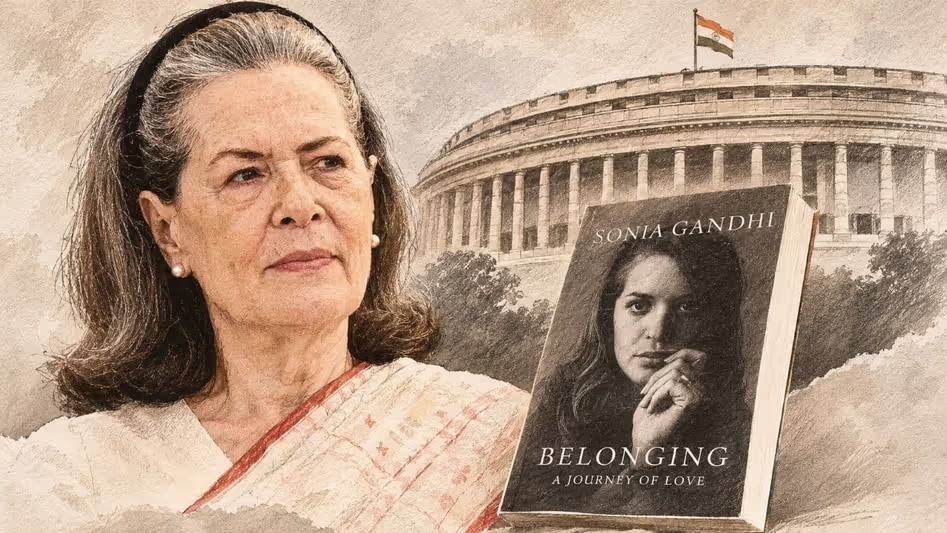
In a surprising lapse, former Congress President Sonia Gandhi, who has been at the heart of Indian parliamentary politics for over two decades, made an inaccurate assertion about India's parliamentary system in her memoir "Belonging." The book, released on November 10, details Gandhi's personal journey from Italy to India's political elite, including her marriage to Rajiv Gandhi and the assassinations of her mother-in-law and husband. However, an examination of the book has revealed numerous factual errors, some elementary and others substantial enough to alter historical understanding.
The error regarding the election process for Rajya Sabha members is just one example. Gandhi incorrectly stated that they are nominated, when in fact they are indirectly elected by state legislatures, with only 12 being nominated by the President. Other errors include misdating the founding of the Rashtriya Swayamsevak Sangh, confusion over the capital city of Gujarat during the 2002 riots, and conflating the results of two general elections in 2014 and 2019.
The historical narrative accompanying Gandhi's personal memories is dotted with mistakes, raising questions about the rigor of fact-checking by the book's editors. Other errors include misrepresenting the timing of Prime Minister Atal Bihari Vajpayee's visit to Islamabad, the duration and outcome of the Kargil conflict, and the timeline of Rahul Gandhi's criminal defamation case.
The memoir's treatment of international affairs also contains errors. For instance, Nelson Mandela's visit to India for the Bharat Ratna award was dated incorrectly, and the leader of India's delegation to Mandela's 1994 presidential inauguration was misidentified as President R.K. Narayan, when it was actually Vice-President K.R. Narayanan. These errors collectively raise concerns about the book's factual accuracy and the thoroughness of its editing process.