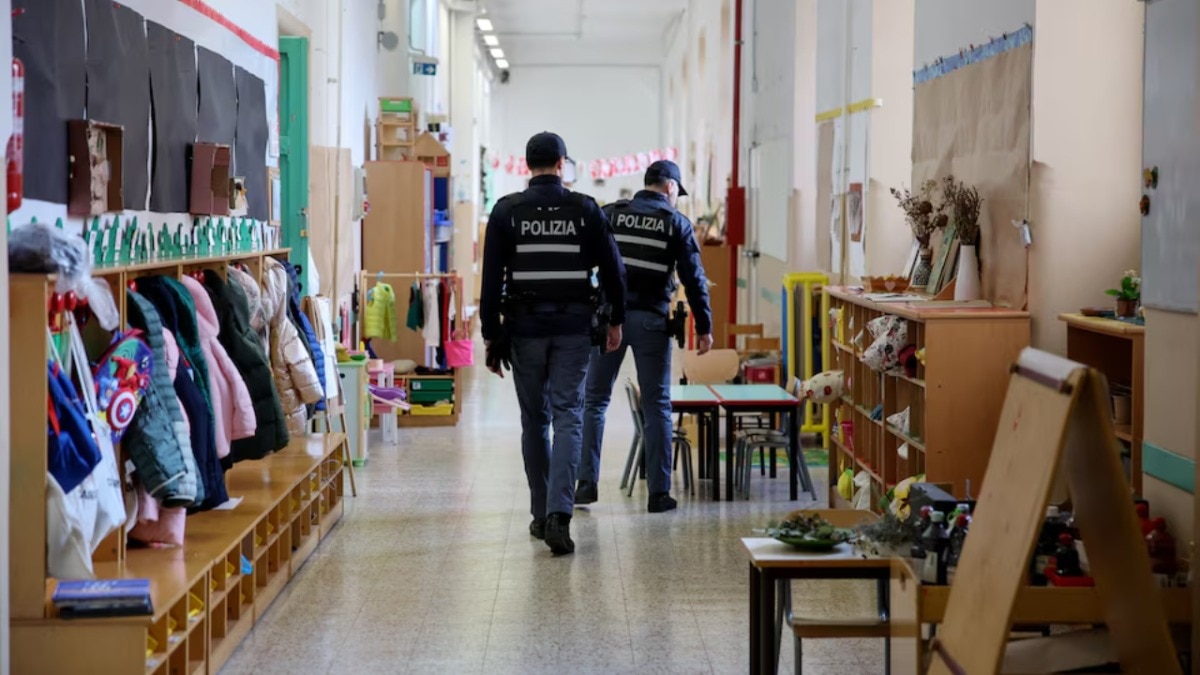
More than 300 schools across Italy were evacuated on Wednesday following a barrage of hoax bomb threats via email. Schools in Scotland, Northern Ireland, and the Republic of Ireland also received similar emails, causing minimal disruption. One email claimed an explosive device had been planted in Italian Prime Minister Giorgia Meloni's car. Authorities assessed these threats as fake, but they caused panic among parents and students, forcing families to rush to schools to pick up their children. The alleged perpetrator of the hoax emails remains unclear, with some suspecting it could be part of a coordinated campaign.
In Italy, the evacuation created confusion outside schools, causing disruption and frustration for families who had to abandon their normal routines. One Rome school informed parents through a messaging app that all students were taken to safe areas under the supervision of teaching staff. The emails appeared to have been sent from abroad, raising concerns about a possible coordinated attack.
Schools in Scotland, Northern Ireland, and the Republic of Ireland also received emails containing similar bomb threats, but the alerts did not lead to major disruptions. The emails were quickly determined to be hoaxes by authorities. It is not clear who is behind these incidents or their motives.
European officials are growing increasingly concerned over a series of disruptive incidents targeting public services and businesses. Some have suggested that Russia could be behind a broader campaign designed to create fear and disrupt everyday life in countries supporting Ukraine following Moscow's invasion. However, Russia has denied such accusations, accusing Western governments of conducting a smear campaign. Iran has also emerged as another focus of European suspicion following a separate cyber incident in France.
Italian Defence Minister Guido Crosetto described the latest threats as part of a broader attempt to unsettle the public. He cautioned against immediately blaming foreign governments for every incident, stating that there are also attention-seekers and lunatics who seek to create terror during times like these. The comments reflect the difficulty facing European authorities: even when a threat is ultimately fake, responding to it can cause significant disruption. For schools, the impact is particularly immediate, with a single threatening email potentially forcing an evacuation, triggering police operations, and leaving parents scrambling to reach their children.