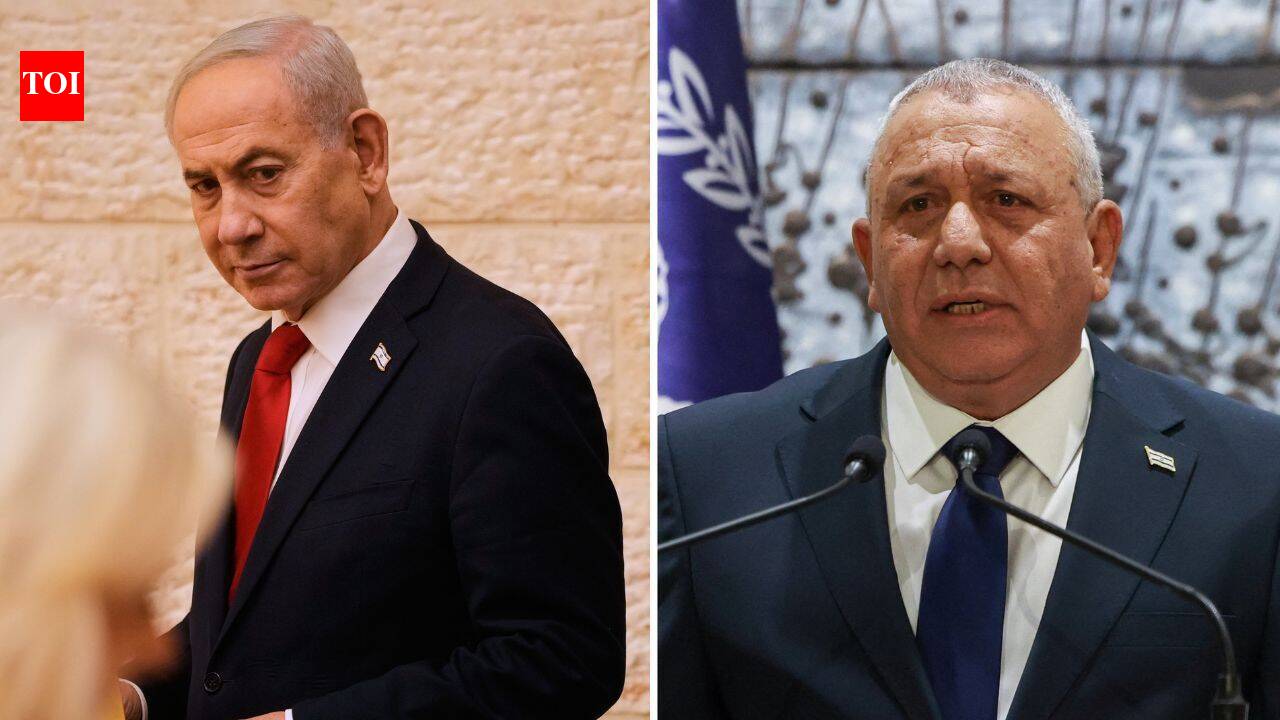
Israeli opposition leader Gadi Eisenkot is posing a significant challenge to Prime Minister Benjamin Netanyahu, who reportedly finds himself in a state of "panic" over the prospect of being ousted from office. According to former Bibi adviser Nir Hefetz, this sense of urgency is driving Netanyahu's decision-making. Hefetz claims that during periods of political uncertainty, urgent calls from Netanyahu's family and associates are frequent. The atmosphere in the Prime Minister's Office, Hefetz suggests, is fraught with tension. Losing office would be particularly challenging for Netanyahu and his family, given the privileges associated with the position. If Eisenkot forms a government, Netanyahu may attempt to slow down the process by calling for a national unity government, according to Hefetz.
Eisenkot's bloc, which includes Naftali Bennett, Yair Golan, Avigdor Liberman, and Yair Lapid, has strengthened its efforts to replace Netanyahu. They have agreed on key positions in the Knesset, with former minister Matan Kahana nominated as their candidate for Speaker of the Knesset. Liberman will head the powerful Foreign affairs and defence committee, while Liran Avisar Ben Horin of Bennett's B'Yachad party has been nominated to chair the Finance Committee, making her the first woman to hold this post. The parties have also agreed to establish special committees.
Eisenkot received a mandate from President Isaac Herzog on Sunday after securing recommendations from lawmakers representing 67 seats, compared with 46 for Netanyahu. If Eisenkot succeeds in forming the next government within the given timeframe, the ultra-Orthodox parties, who hold 13 seats and have traditionally been Netanyahu's allies, could prove crucial to coalition negotiations.
Hefetz suggests that Netanyahu views Eisenkot as a more formidable opponent than former prime minister Naftali Bennett. Hefetz claims that during the first months when Bennett was prime minister, Netanyahu was in a "terrible mood," but Eisenkot is perceived as a greater threat due to his political prowess and lack of fear towards the incumbent Prime Minister.