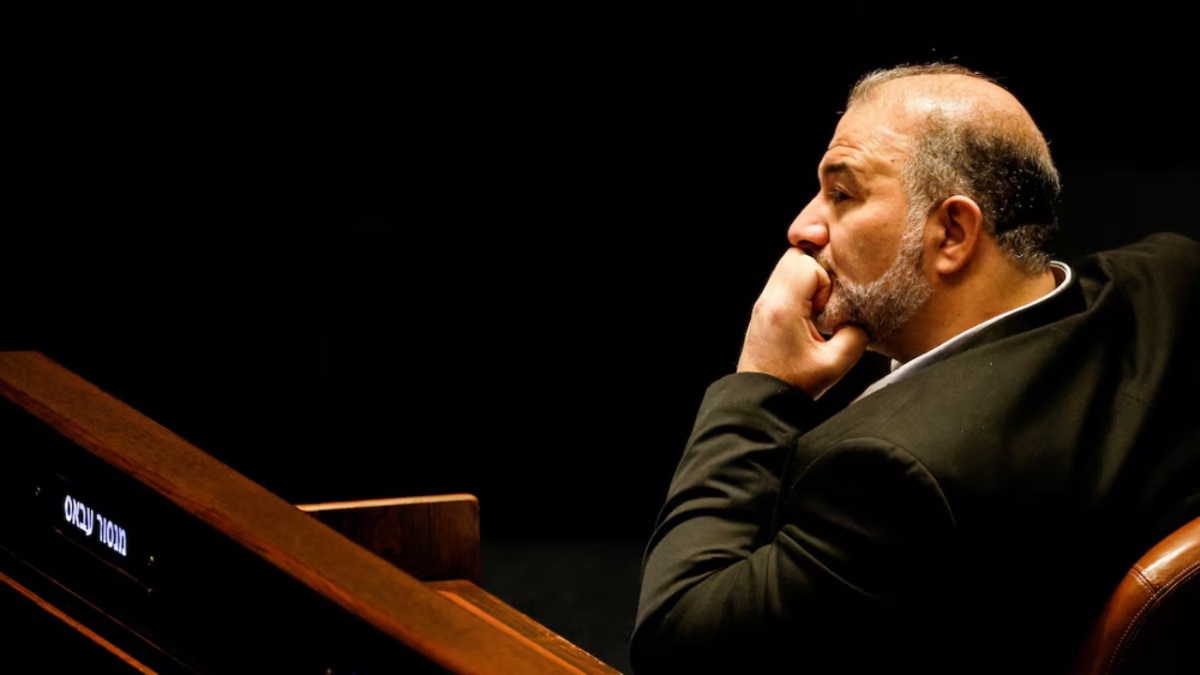
Israel is witnessing intense coalition negotiations as parties race to form the next government. Ra'am, an Arab-led Islamist party representing Israel's Arab citizens, has indicated a significant move towards joining the anti-Netanyahu bloc by agreeing to recognize Hamas as a terrorist organization. Ra'am chairman Mansour Abbas reportedly told coalition members that he is prepared to make this recognition in exchange for a "genuine partnership" with other Israeli parties. This development could help remove one of the biggest obstacles for Ra'am joining the coalition being assembled by Yashar chairman Gadi Eisenkot, who has made recognition of Hamas as a terrorist organization a condition for coalition participation.
Israel's President Isaac Herzog tapped Eisenkot, a former military chief and prominent opponent of Prime Minister Benjamin Netanyahu, to form the next government following elections in which Netanyahu's bloc remained the largest force but failed to secure a governing majority. Eisenkot now faces the daunting task of bringing together parties with sharply different political positions to cross the 61-seat threshold required to form a government in the 120-member Knesset. Smaller parties, including Arab and ultra-Orthodox factions, could play a crucial role in these coalition negotiations.
For Abbas, the reported willingness to recognize Hamas could be an attempt to overcome a political barrier that has previously kept Ra'am outside broader coalition arrangements. However, even if this hurdle is removed, other disagreements remain, particularly with Yisrael Beytenu leader Avigdor Liberman, who has said he will not join a minority government that depends on outside support from Ra'am and the Joint List. This position could make it harder for Eisenkot to build a coalition even if Abbas agrees to the Hamas condition.
The political divide deepened on Tuesday as Prime Minister Benjamin Netanyahu warned of potential international pressure to accept a nuclear-armed Iran, while calling for a national unity government to confront this threat. Speaking in the Knesset, Netanyahu argued that Israel's long-term security depended on removing the Iranian threat at its source. According to Netanyahu, "the only way to permanently remove this existential threat is through the downfall of the Ayatollah regime." His remarks immediately drew criticism from opposition leader Gadi Eisenkot.