India's Remaining Poverty Concentrated in Uttar Pradesh to Bengal Regions
Despite a significant reduction in extreme poverty rates, about half of India's poor are still concentrated in a continuous belt spanning from Uttar Pradesh to West Bengal.
By News Rush Point Desk
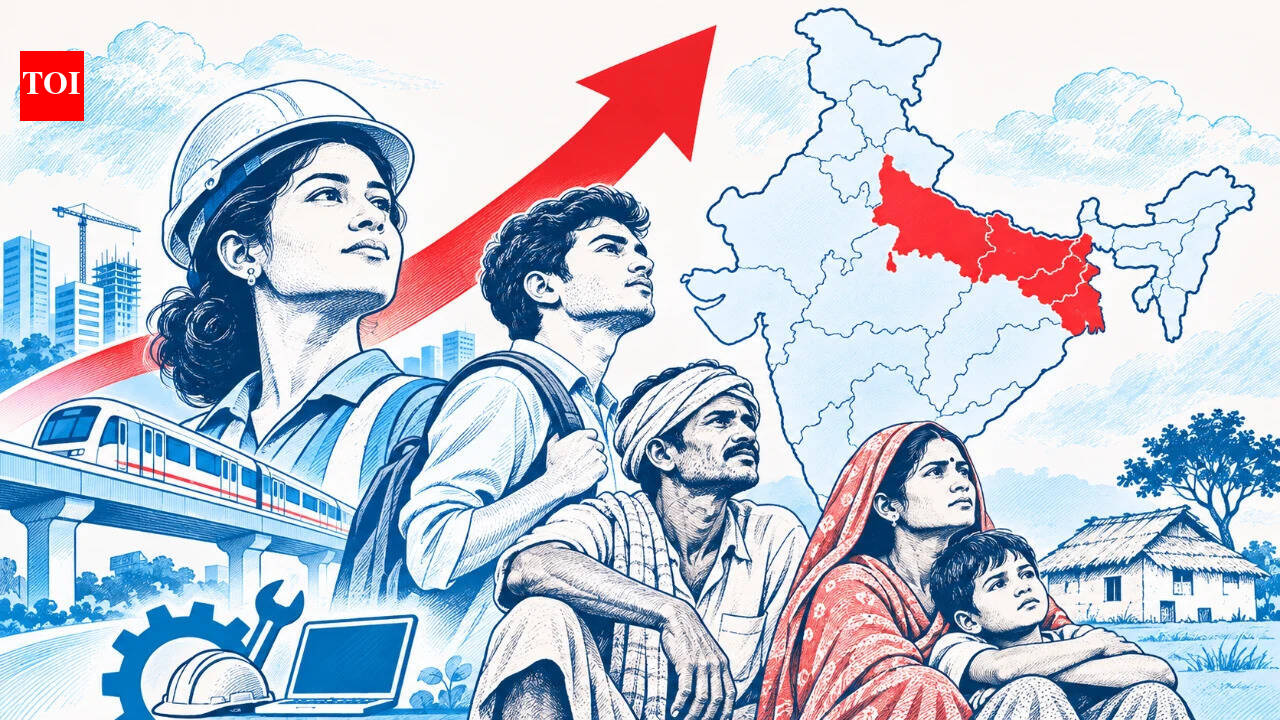
Despite a significant reduction in extreme poverty rates, about half of India's poor are still concentrated in a continuous belt spanning from Uttar Pradesh to West Bengal. The World Bank's October 2026 Poverty & Equity Brief reveals that India has made rapid progress in reducing poverty, but the remaining impoverished population is mainly found in particular regions with fewer assets, less education, and limited access to well-paying jobs. By 2023-24, fewer than three Indians out of every 100 lived below the international extreme-poverty line of $3 a day, a decline that places India among countries with one of the fastest poverty reduction rates worldwide. However, about 19.6 crore Indians still live below the higher $4.20-a-day line, a threshold used for lower-middle-income countries like India. The states with the highest extreme-poverty rates include Jharkhand (12.9%), Bihar (4.1%), Uttar Pradesh (2%), and West Bengal (14.5%). Notably, Uttar Pradesh, despite having a lower poverty rate, has the largest number of people below the $4.20-a-day line among these states. This concentration of poverty in specific regions highlights the need for targeted policies and economic development strategies to create better job opportunities and break the cycle of intergenerational poverty in India.
Filed underBreaking
More stories
Breaking
Sonia Gandhi Recalls Heartbreaking Loss of First Child Before Rahul's Birth
Breaking
Sonia Gandhi's Memoir Reveals Intimate Details of Global Leaders' Encounters
Breaking
Australian Billionaires Donate $120 Million to Save Rare Parrot and Protect Wildlife
Breaking
The Confession Booth Effect: Why AI Becomes Our Go-To Confidant Amid Vulnerability
Breaking
India's Aditya-L1 Mission Uncovers Unusual Expansion of Solar Eruptions, Aiding Solar Storm Predictions
Breaking