India's Aditya-L1 Mission Uncovers Unusual Expansion of Solar Eruptions, Aiding Solar Storm Predictions
In a groundbreaking discovery, Indian scientists have found that solar eruptions do not always expand uniformly as previously thought.
By News Rush Point Desk
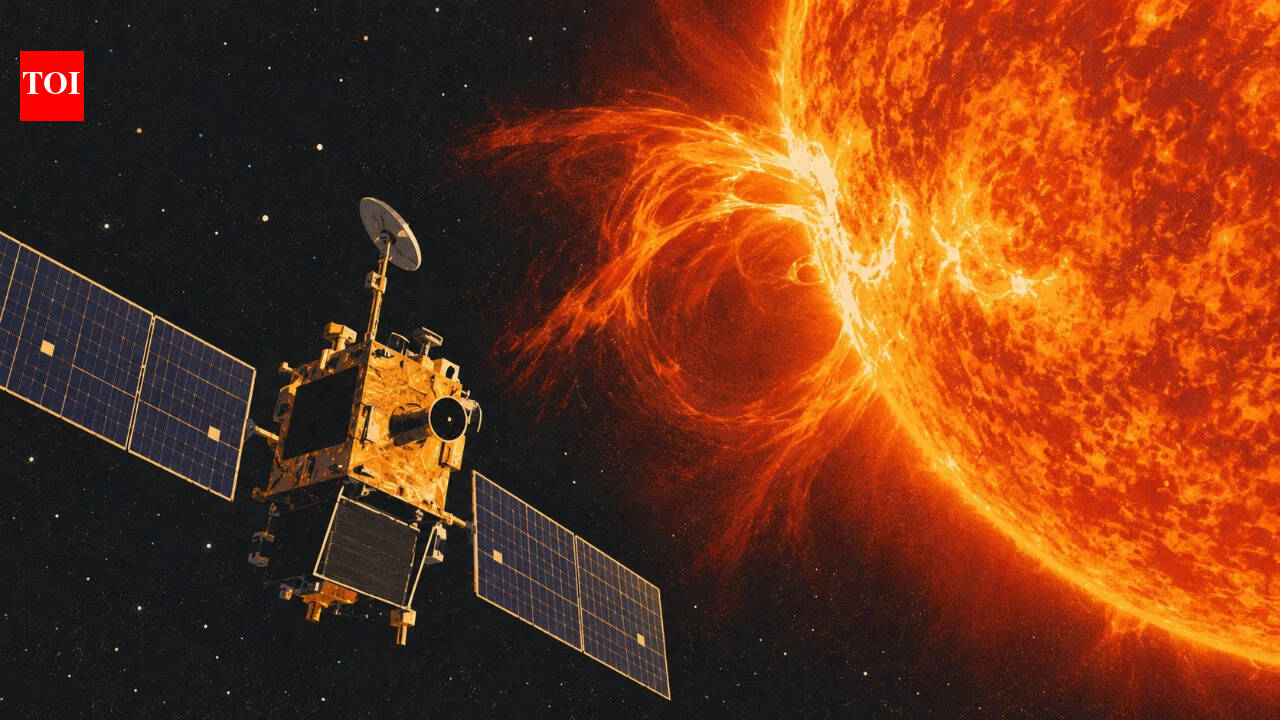
In a groundbreaking discovery, Indian scientists have found that solar eruptions do not always expand uniformly as previously thought. Using data from India's Aditya-L1 solar mission and other space instruments, researchers at the Indian Institute of Astrophysics discovered that an August 2024 solar eruption expanded asymmetrically rather than symmetrically. This finding challenges a common assumption about how these eruptions behave close to the Sun. By understanding the asymmetrical expansion pattern of solar eruptions, scientists hope to improve predictions of when potentially disruptive solar storms might reach Earth, protecting satellite-based navigation, communication systems, electricity networks, and other critical technologies from the harmful effects of such storms. Solar eruptions are powerful releases of magnetised plasma from the Sun's outer atmosphere that can travel through interplanetary space at high speeds, causing geomagnetic storms when they reach Earth. These storms have far-reaching impacts on modern society, affecting satellite operations, radio communications, GPS accuracy, power transmission networks, aviation, and positioning services. The ability to monitor and forecast solar activity is crucial for various industries, including satellite operators, communication networks, aviation authorities, and power-grid managers. However, predicting the behavior of a solar eruption after it leaves the Sun remains complex due to challenges in understanding its three-dimensional movement during the initial stages of an eruption. Scientists use coronagraphs to observe these eruptions, but conventional images primarily capture movement across the observer's field of view, making it difficult to determine how fast the plasma is moving towards or away from the observer. The missing information is essential for accurate predictions and understanding how solar eruptions may interact with the surrounding solar wind, potentially affecting their speeds during propagation.
Filed underBreaking
More stories
Breaking
Sonia Gandhi Recalls Heartbreaking Loss of First Child Before Rahul's Birth
Breaking
Sonia Gandhi's Memoir Reveals Intimate Details of Global Leaders' Encounters
Breaking
Australian Billionaires Donate $120 Million to Save Rare Parrot and Protect Wildlife
Breaking
India's Remaining Poverty Concentrated in Uttar Pradesh to Bengal Regions
Breaking
The Confession Booth Effect: Why AI Becomes Our Go-To Confidant Amid Vulnerability
Breaking