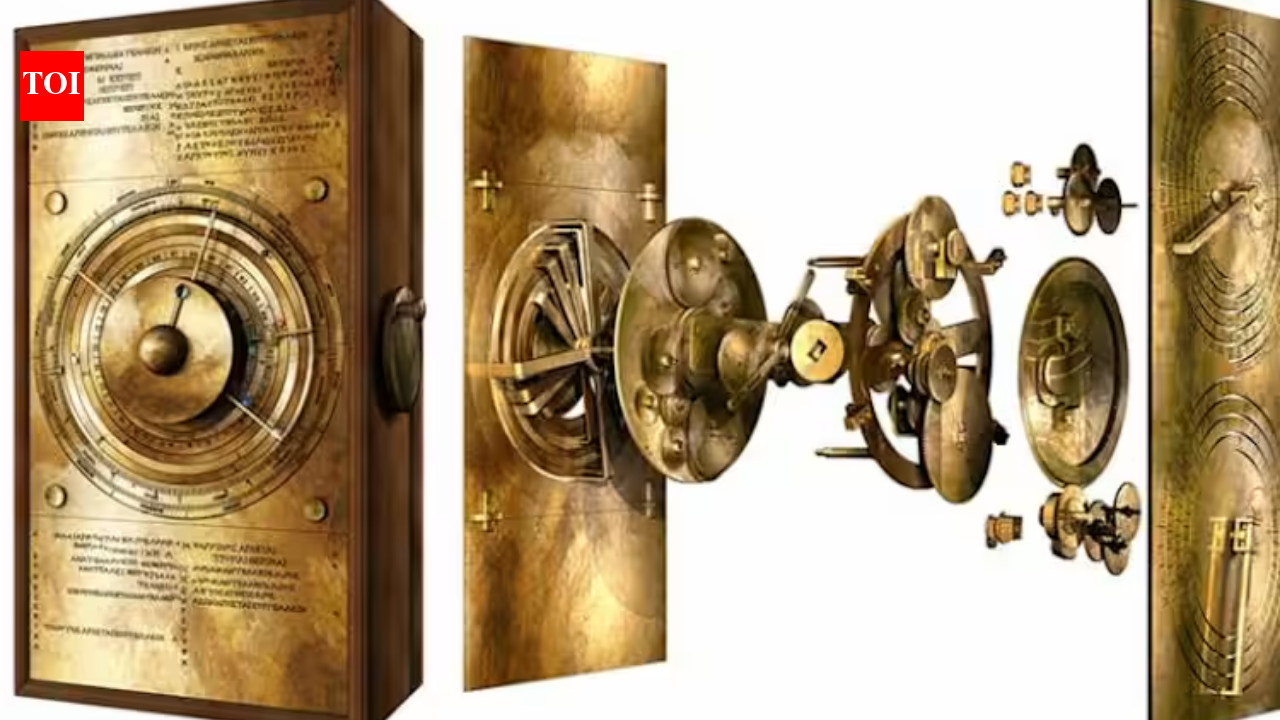
A hand-powered device from ancient Greece, the Antikythera Mechanism, built around 2,100 years ago, is being hailed as an engineering marvel. Discovered in a shipwreck near Crete around 60 BCE, this instrument was used to track celestial bodies, predict eclipses, and even mark the dates of the ancient Olympics. Often referred to as the world's first analogue computer, it features interlocking bronze gears that perform complex calculations. Previously, Greek craftsmen were believed to have only made simple fixed gears. However, this device showcases intricate epicyclic gears, a testament to the advanced skills of its creators. Tony Freeth from the University College London Antikythera Research Team calls it "almost unbelievable in its brilliance."
Although these devices were probably rare and only built by a select few workshops around 100 BCE, one survived due to an unfortunate accident - a shipwreck off the island of Antikythera. It remained submerged until 1900 when sponge divers found it while seeking shelter from a storm. The mechanism, now housed in a museum, offers insights into ancient Greek astronomical calculations and marks a significant step in the development of mechanical thinking.
The Antikythera Mechanism reflects the influence of Babylonian and Egyptian astronomy on Greek science. Thales of Miletus, who studied in Babylon, is often credited as the first Greek astronomer. The Ionian thinkers who followed him made a significant shift by arguing that nature follows rules people can understand rather than being influenced by the moods of gods. Pythagoras further developed this idea by believing numbers could explain celestial phenomena. This gear-driven model of the sky is a testament to these philosophical ideas and the resulting technological advancement.
The Antikythera Mechanism demonstrates that ancient Greek engineers were far more capable than previously thought, challenging our assumptions about the history of technology. It also serves as a reminder that knowledge can be lost and regained, emphasizing the importance of preserving historical artifacts for future generations.