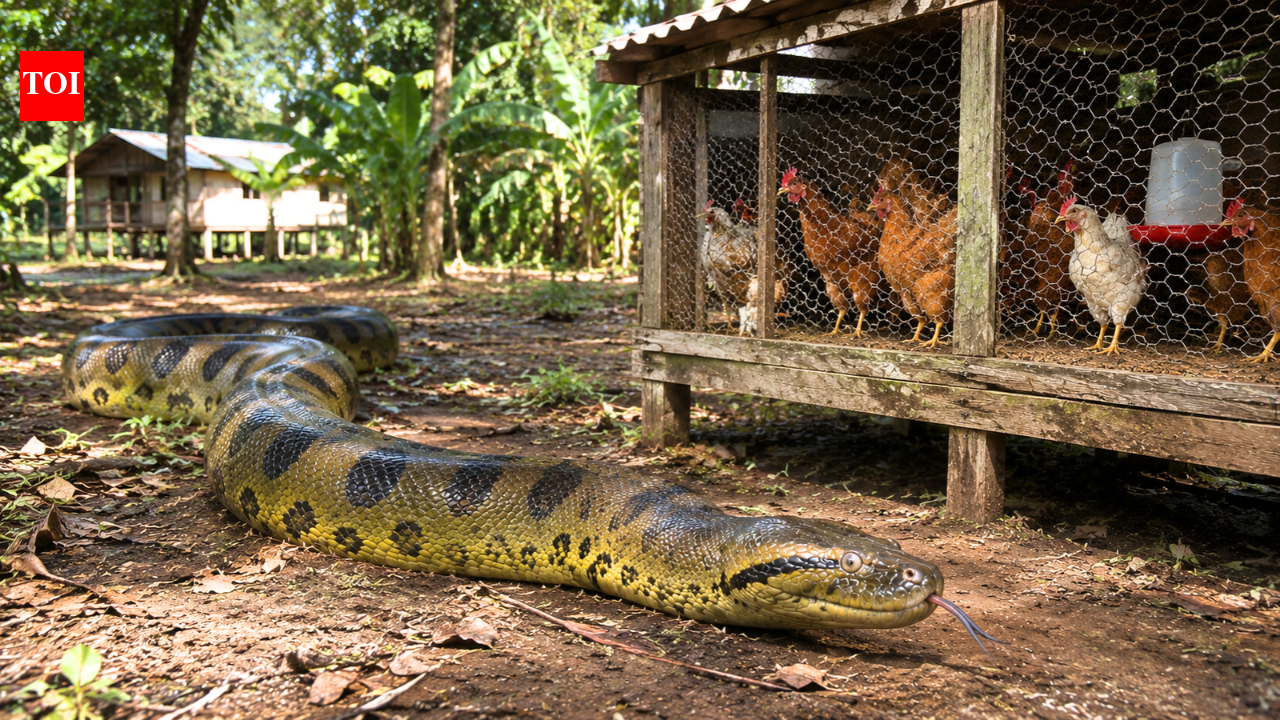
Amazon villagers living along the Lower Amazon in Brazil are dealing with an increasing issue of green anacondas threatening their poultry, as these snakes enter chicken coops and consume birds. A study conducted in five riverside communities in Pará unveiled that economic losses, not just fear, drive residents to kill these giant reptiles. The research, published on June 16, 2025, in Frontiers in Amphibian and Reptile Science, focused on the Aritapera region of Santarém municipality in Brazil's Pará state.
Researchers spent 64 days interviewing residents and documenting their experiences with anacondas. They found that the economic loss due to the death of domestic animals, particularly chickens and chicks, was the leading cause for killing anacondas, accounting for 47.7% of the reported reasons. The study also revealed local knowledge about the reptiles' behavior, traditional beliefs surrounding a mythical Great Snake, and practical suggestions for protecting poultry, such as reinforcing coops with mesh.
According to residents, anacondas can enter chicken coops through small openings and gaps due to their ability to squeeze through narrow spaces. The study recorded accounts of snakes entering coops to prey on chickens and ducks. In some cases, the structures may trap an anaconda inside after it has fed, leading to conflicts with residents. Researchers suggest improving chicken coop designs as a practical way to reduce conflict by creating stronger enclosures with closely spaced slats, covered with fine nylon mesh, and an additional outer layer of plastic aviary grid, which offers the best protection against anaconda attacks while allowing them to remain in their natural habitat.
The study also explored the cultural relationship between residents and anacondas, finding that the mythical creature known as the Great Snake in Amazonian folklore still shapes local perceptions. Some residents described encountering signs of the legendary creature. However, everyday encounters are increasingly shaping how residents view anacondas, moving away from traditional beliefs and toward practical solutions for cohabitation. The researchers' findings suggest that improved henhouses could be a promising first step towards reducing the number of anacondas killed in the region, while also emphasizing the need for conservation strategies developed in collaboration with local communities.