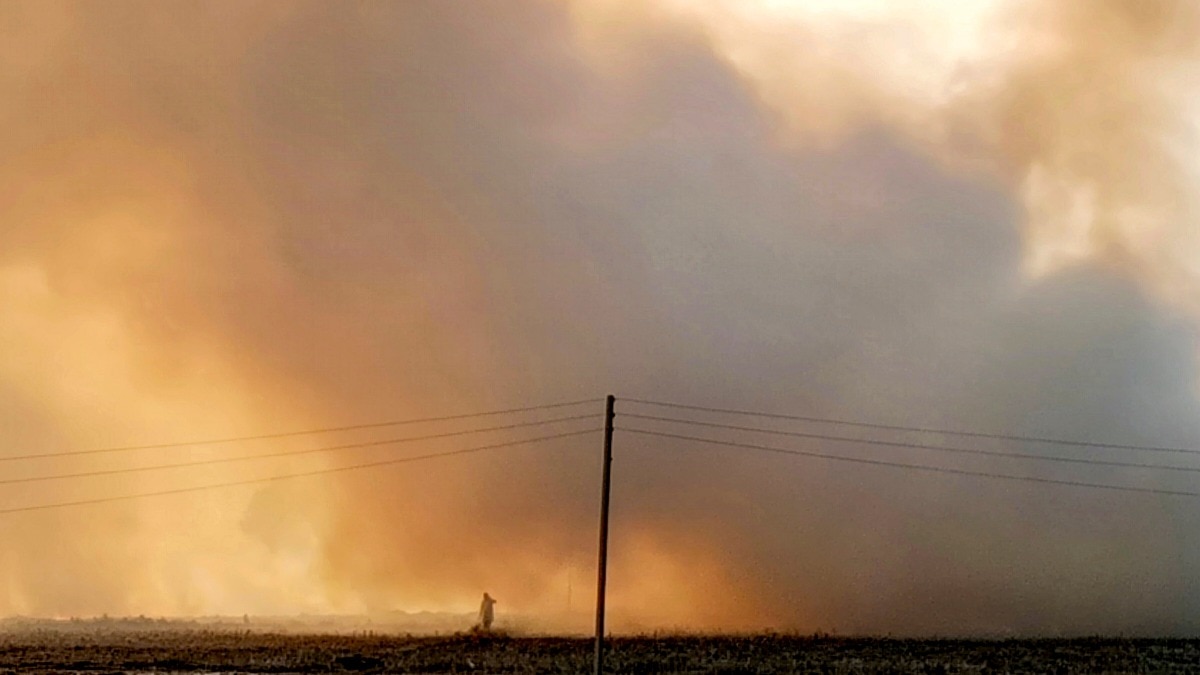
Bathinda in the state of Punjab has topped the global pollution charts with an Air Quality Index (AQI) reaching 1,048 on Thursday, according to AQI.in. The city surpassed Meerut in Uttar Pradesh and Sirsa in Haryana, which recorded 680 and 636 respectively. Contrary to popular belief, the soaring pollution levels are not attributed to Diwali firecrackers but rather continuous burning of paddy stubble across Punjab and unfavorable weather conditions that hinder pollutant dispersion. All ten most polluted cities in the world on Thursday were in India, with the majority being from Punjab, Haryana, and Uttar Pradesh, recording AQI above 400.
The ongoing paddy harvesting season in Punjab contributes to widespread crop-residue burning. Farmers burn leftover stalks after rice harvesting to clear their fields quickly for the next wheat crop, releasing large amounts of smoke and fine particles, including PM2.5. According to data from the Commission for Air Quality Management (CAQM), Punjab recorded 4,459 farm-fire incidents up to November 8, with Bathinda accounting for 406 incidents, making it the fourth-worst affected district in the state. The problem worsened around Diwali, with Punjab recording 1,152 farm fires on November 8 alone, and Bathinda accounting for 132 incidents.
Weather conditions play a significant role in exacerbating the pollution situation. During November, falling night-time temperatures and relatively stable atmospheric conditions can prevent polluted air from rising and mixing with cleaner air above, creating a situation where pollutants remain trapped closer to the ground. Light winds can further slow the movement of polluted air out of an area. Bathinda's weather on Thursday was marked by smoky haze, with winds remaining relatively light during the morning, contributing to pollution accumulation and higher levels.
Despite efforts to control firecracker usage during Diwali, it is clear that India's pollution problem extends beyond festivities. Seasonal farm burning and unfavorable weather conditions can continue to deteriorate air quality long after the celebrations are over. The situation in Bathinda serves as a reminder of the need for comprehensive solutions to address India's persistent pollution challenges.