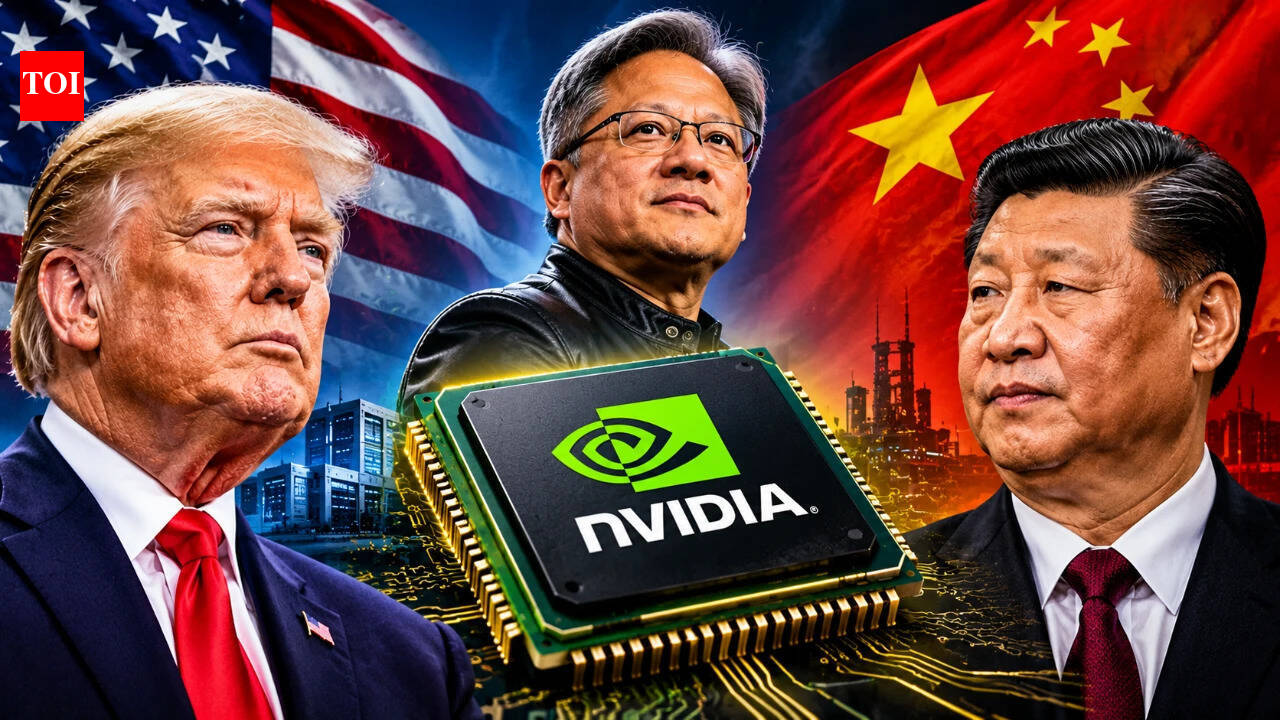
Nvidia's chief executive, Jensen Huang, is under investigation for his alleged ties to Chinese intelligence following an extramarital affair with Alice Huang, a former executive of Singapore-based Megaspeed. The company is under scrutiny over the suspected diversion of advanced Nvidia chips to China. According to US intelligence assessments, there are concerns about Alice Huang's links to Chinese intelligence, but these claims remain unproven and have been rejected by Beijing.
The investigation comes at a time when Nvidia is grappling with the challenge of maintaining its market presence in China while adhering to American export restrictions on advanced AI chips. These restrictions aim to limit China's access to computing power that could support advanced AI development and military capabilities.
Nvidia's AI chips, particularly their graphics processing units (GPUs), are valuable due to their ability to perform large numbers of calculations simultaneously, making them ideal for training and running AI models that require enormous computing power. The importance of these chips extends beyond the technology industry, with applications in scientific research, industrial automation, intelligence analysis, surveillance, and military applications. As a result, governments view access to high-performance chips as a matter of economic competitiveness and national security.
The US's dominance in chip design and semiconductor technology, coupled with its export-control rules, provides it with considerable strategic leverage. However, the restrictions have been criticized by Huang, who argues that excluding American companies from China could strengthen local rivals. The US Commerce Department has revised its licensing approach to allow certain exports of Nvidia's H200 processors and comparable chips to China on a case-by-case basis, but with conditions such as requirements relating to US supply capacity, customer compliance procedures, and third-party testing in the US.
China, despite its investments in developing its own semiconductor industry, has yet to fully match Nvidia's capabilities across the high-end AI computing market. Chinese authorities have reportedly restricted purchases of advanced chips like the H200 to special circumstances and encouraged domestic companies to rely more heavily on locally developed processors. This standoff has resulted in a backlog of around 600,000 Nvidia H200 processors being held in Hong Kong while awaiting shipment to mainland China.
In response, China is accelerating the development of domestic alternatives, with companies like Huawei seeking to fill the gap left by Nvidia. The outcome of this standoff could have significant implications for the global AI chip market and the technology war between Washington and Beijing.