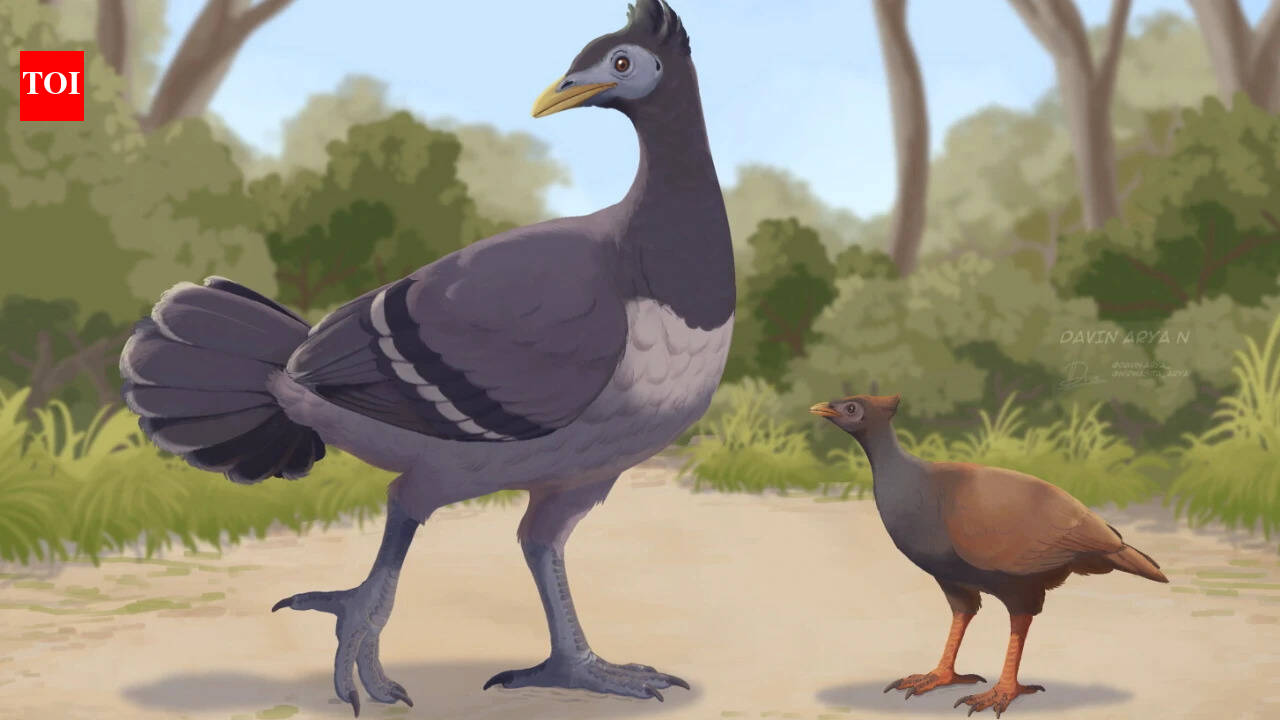
A long-forgotten fossil leg bone discovered in Liang Bua cave on Indonesia's Flores Island has been reevaluated, revealing it to be a new and extinct species of megapode. The ground-dwelling bird, named Megapodius rokusi, is the first megapode fossil ever found in Wallacea and one of the largest of its kind. The fossil was initially overlooked due to the focus on mammal remains, but researchers have now identified it as belonging to a large species of megapode. The bird would have weighed around 3.9 kilograms, significantly more than its living cousin on Flores today. Researchers found the fossil in the deepest layers of Liang Bua cave and named it after Rokus Due Awe, who first recognized the bones of Homo floresiensis and later identified this fossil as a bird bone. The discovery adds to our understanding of ancient birds and suggests that more megapode fossils may still be waiting to be discovered in Wallacea.
PARAGRAPH 1:
Researchers have reevaluated an old fossil found in Liang Bua cave on Flores Island, Indonesia. Initially overlooked due to the focus on mammal remains, the fossil has now been identified as a new and extinct species of megapode. The bird, named Megapodius rokusi, is significant because it is the first megapode fossil ever found in Wallacea and one of the largest of its kind.
PARAGRAPH 2:
The discovery was made possible by a second look at the fossil after almost 17 years. The fossilized leg bone was found in the deepest layers of Liang Bua cave, and researchers compared it with those of living and extinct megapode species. They concluded that it belonged to a new large species due to its size and shape.
PARAGRAPH 3:
The bird would have weighed about 3.9 kilograms, making it significantly larger than the orange-footed megapode, the only living megapode on Flores today. Researchers are uncertain whether the bird could fly due to the absence of wing bones in the fossil. The extinction date of Megapodius rokusi is also unknown, although it may have disappeared around the same time as other animals found in Liang Bua cave or much earlier.
PARAGRAPH 4:
The discovery of Megapodius rokusi adds to our understanding of ancient birds and suggests that more megapode fossils may still be waiting to be discovered in Wallacea. The researchers named the species after Rokus Due Awe, who first recognized the bones of Homo floresiensis and later identified this fossil as a bird bone. Southeast Asia is considered a biodiversity hotspot, but what we see today is only a remnant of what once was, and more megapode fossils may still be waiting to be discovered in Wallacea.