Middle East Power Bloc Expands: Turkey-Saudi Arabia-Pakistan Pact to Include More Islamic Nations
The Mecca Joint Defense Agreement, dubbed the 'Islamic NATO' or 'Sunni NATO', has expanded its sights beyond its initial members - Pakistan, Saudi Arabia, and Turkey.
By News Rush Point Desk
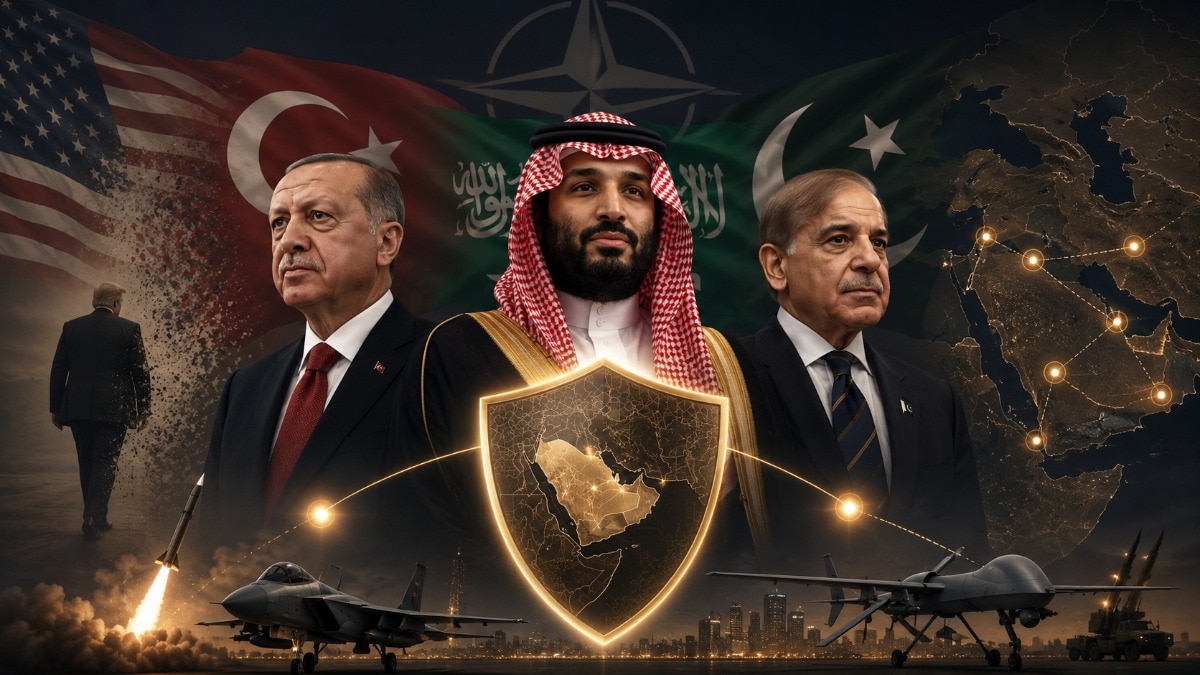
The Mecca Joint Defense Agreement, dubbed the 'Islamic NATO' or 'Sunni NATO', has expanded its sights beyond its initial members - Pakistan, Saudi Arabia, and Turkey. According to experts, Egypt, with Africa's most powerful military, is poised to join, followed by Qatar, Kuwait, Jordan, Azerbaijan, and Syria in discussions. The pact, similar to NATO's Article 5, treats an armed attack on one member as an attack on all. This move comes amid growing concerns over the reliability of American security guarantees in the Middle East region. The US has been under scrutiny for its response to missile and drone strikes from Iran on countries hosting American bases. The Mecca Pact appears to be a regional response to a changing world order, where the US's unquestioned role as a security provider is being questioned. Some political analysts believe it marks the first attempt in decades to build a regional security architecture led by Muslim powers. Saudi Arabian political scientist Mansour Almarzoqi suggests that this pact is just the foundational step towards something bigger, serving as a framework for aggregating the might of the three global middle-size powers. The US Congressman's claim that President Donald Trump helped broker the Mecca Agreement adds fuel to these speculations. As the US seeks an exit from the ongoing conflict in the Middle East, the real test for the Turkey–Saudi Arabia–Pakistan pact will be when one member faces an attack the others would rather avoid. Egypt has been identified as a likely next entrant, with Turkey's Foreign Minister Hakan Fidan citing President Recep Tayyip Erdogan's vision for the alliance to grow and potentially include all countries under its umbrella. Qatar and Kuwait are also considered strong Gulf candidates to join the expanding bloc.
Filed underWorld
More stories
World
Bangladesh: Over 2,000 Higher Education Professionals Face Political Persecution, Report Finds
World
Collapse at Pakistan's Tarbela Dam Project Halts Construction, Investigation Reveals Design Flaws and Contractual Breaches
World
French Officials Accuse Iran's IRGC of Cyberattacks on Refrigeration Sites Across France
World
White House Briefly Locked Down Due to Car Crash and Barricade Jumping Nearby
World
Trilateral Peace Talks in Abu Dhabi: Ukraine, Russia, and US Discuss Security Guarantees and Territorial Disputes
World