India's Laser Weapon Advancement: Deploying Drones Downers on the Horizon?
In a significant leap towards modernizing air defense, India is moving its indigenous Directed-Energy Weapon (DEW) program from technology demonstrations to industrial production.
By News Rush Point Desk
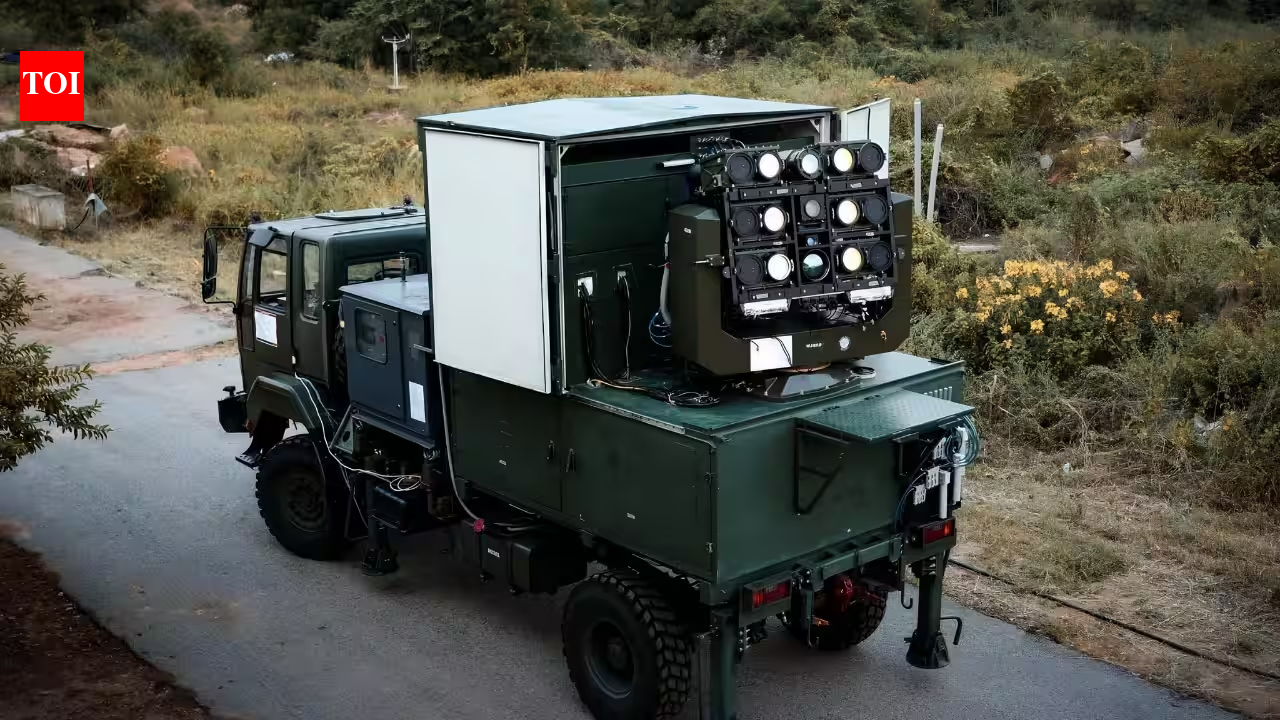
In a significant leap towards modernizing air defense, India is moving its indigenous Directed-Energy Weapon (DEW) program from technology demonstrations to industrial production. The DEW, capable of shooting down drones at a fraction of the cost of traditional missiles, could potentially disrupt conventional warfare calculations. By focusing concentrated beams on vulnerable parts of targets like airframes, engines, or control systems, these lasers generate heat that weakens structures or disables critical components. While the system requires sensors for target detection and classification, trackers to follow targets, beam-control optics to maintain aim, and power and cooling equipment, artificial intelligence can aid in classification, tracking, and selecting vulnerable sections to target. The main appeal of these weapons lies in their cost per engagement, as they do not consume missiles, shells, or bullets to bring down a single drone; their marginal cost primarily being the electricity or fuel needed to power them. However, while laser weapons offer greater magazine depth, their effectiveness in conclusively destroying targets and cost-effectiveness remain questionable. India's Defence Research and Development Organisation (DRDO) has made significant strides, showcasing its 30-kilowatt MK-II(A) laser DEW in April 2025, capable of countering drone swarms, fixed-wing UAVs, and surveillance sensors at ranges up to 5 km. Despite progress, these weapons are still around five to ten years away from maturing into practical battlefield capabilities. The DRDO aims to select an industry partner for the first production model within six months, signaling a move towards production but not yet indicating induction or mass availability. Various systems in this family of weapons are at different stages of development, with some reportedly in production and others still in development phases. The race is on as India seeks to fortify its air defense capabilities with these innovative, cost-effective technologies.
Filed underIndia
More stories
India
St. Louis Drummer Bobby Taylor Passes Away After Long Cancer Battle
India
Daily Astrology Love Horoscope: Zodiac Insights on Romance for November 10, 2026
India
Retired Electrician Wins Inheritance Battle After Murder Accusation Overturned
India
Sustainable Diwali Decor: Revamp Your Home with Zero-Waste Ideas
India
Jeff Bezos Upgrades Miami Mansion as $234M Billionaire Bunker Dream Home Takes Shape
India