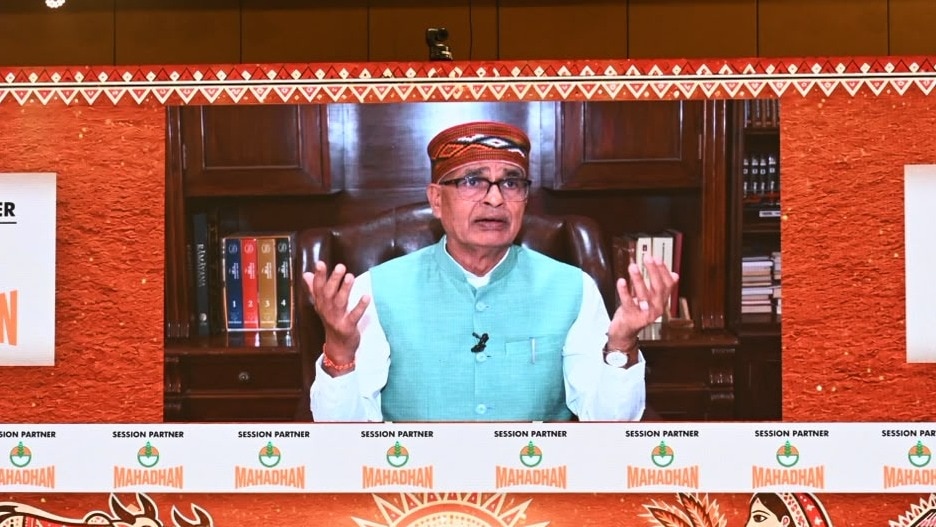
Union Minister Shivraj Singh Chouhan addressed the Bharat Agriculture Conference 2026, organized by Kisan Tak at Bharat Mandapam in New Delhi, virtually, on Wednesday. Chouhan reportedly announced that India's agricultural growth rate had risen to 4.5%, a significant increase from around 3% during the Green Revolution. Over the past decade, agricultural production has surged nearly 50%. India is now the world's leading producer of several foodgrains and has strengthened its position in global fruit and vegetable production. Chouhan acknowledged that although the country had become largely self-sufficient in foodgrains and moved from depending on imports to exporting wheat and rice, there were still gaps to be bridged in pulses and oilseeds production.
The minister stated that the government's agricultural roadmap aimed to ensure food security for India's 140 crore people while improving nutrition and farmers' livelihoods. Chouhan emphasized that farmers, who are not just annadata but also jeevandata, should receive fair prices for their produce while ensuring that food remains affordable for consumers. He assured farmers that import and export policies would be framed with their interests in mind, acknowledging the need to balance producers' and consumers' interests.
When asked about the government's earlier promise to double farmers' incomes, Chouhan stated that a survey was underway to establish the latest position, as the figures cited were based on 2018 data. He highlighted crop insurance as an important safeguard against losses and cited the distribution of over Rs 4.66 lakh crore through the PM-KISAN scheme. Chouhan also mentioned plans to promote climate-resilient seeds, improve per-hectare productivity, encourage soil testing, and reduce the difference between farmers' earnings and market prices.
The government aims to increase India's current foodgrain production of around 376 million tonnes to 550 million tonnes by 2047. A roadmap has already been prepared to achieve this target, with technology, productivity improvements, and better market access forming key components. Free trade agreements with several countries will open up international markets for Indian farmers, while horticulture clusters are being developed to encourage farmers to grow specific crops of export quality and improve their earnings. Chouhan apologized for not being physically present at the conference due to personal reasons and thanked the organizers for arranging his virtual participation.