Delhi Diwali Pollution Hits 5-Year High, Narrowly Escapes Post-Diwali Crisis
In a concerning turn of events, Delhi witnessed its most polluted Diwali day in five years on November 8, with the Air Quality Index (AQI) reaching 376 at 4pm.
By News Rush Point Desk
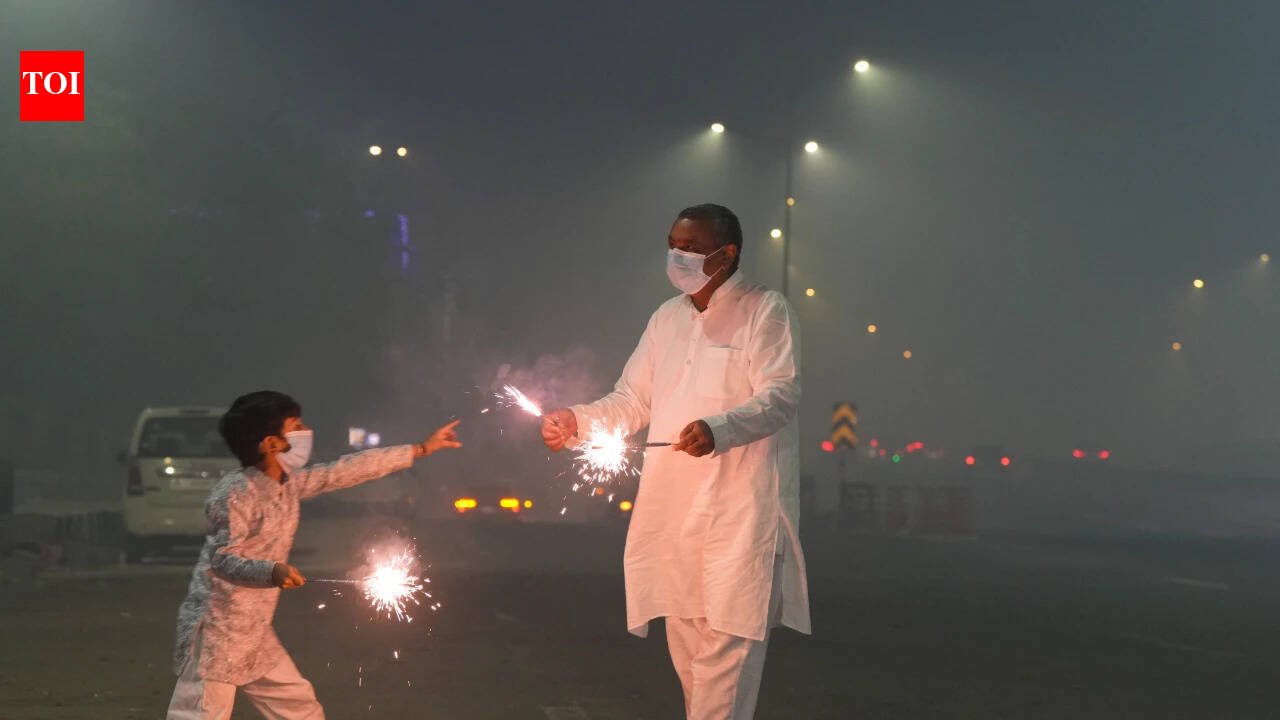
In a concerning turn of events, Delhi witnessed its most polluted Diwali day in five years on November 8, with the Air Quality Index (AQI) reaching 376 at 4pm. The city narrowly avoided its worst post-Diwali pollution day in five years, as the AQI peaked at 370 at 11am but improved to 344 by 4pm, surpassing the 2025 post-Diwali air quality. Diwali AQI in 2025 was 345, 328 in 2024, 218 in 2023, 312 in 2022, and 382 in 2021. Post-Diwali AQI in 2025 was 351, 339 in 2024, 358 in 2023, 303 in 2022, and 462 in 2021. The pre-Diwali evening on November 7 was the most polluted since 2016, with an AQI of 369. Several monitoring stations failed to report crucial AQI data, with hourly data going missing for 35 air quality monitoring stations initially. Firecrackers emerged as the leading cause of pollution a day before Diwali, accounting for 41.1% of the total load. The average PM2.5 concentration on Diwali 2026 stood at 257 µg/m³, against 228 µg/m³ last year, with traces of lead, potassium, and sulphur in the air confirmed. Delhi saw the season's first dense fog on Monday, with visibility dropping to 50m at Safdarjung at 6.30am. The post-Diwali reprieve was more meteorological than the result of pollution-control measures, as winter conditions set in, potentially bringing back the familiar pollution cocktail. Experts stated that the situation reflected the region's worsening pollution-control battle, with Delhi being "very lucky" this year due to an unusual weather development associated with an approaching cyclone and a western disturbance causing winds to turn easterly. The easterlies were expected to persist until Tuesday morning, before potentially reverting to northwesterly.
Filed underIndia
More stories
India
St. Louis Drummer Bobby Taylor Passes Away After Long Cancer Battle
India
Daily Astrology Love Horoscope: Zodiac Insights on Romance for November 10, 2026
India
Retired Electrician Wins Inheritance Battle After Murder Accusation Overturned
India
Sustainable Diwali Decor: Revamp Your Home with Zero-Waste Ideas
India
Jeff Bezos Upgrades Miami Mansion as $234M Billionaire Bunker Dream Home Takes Shape
India