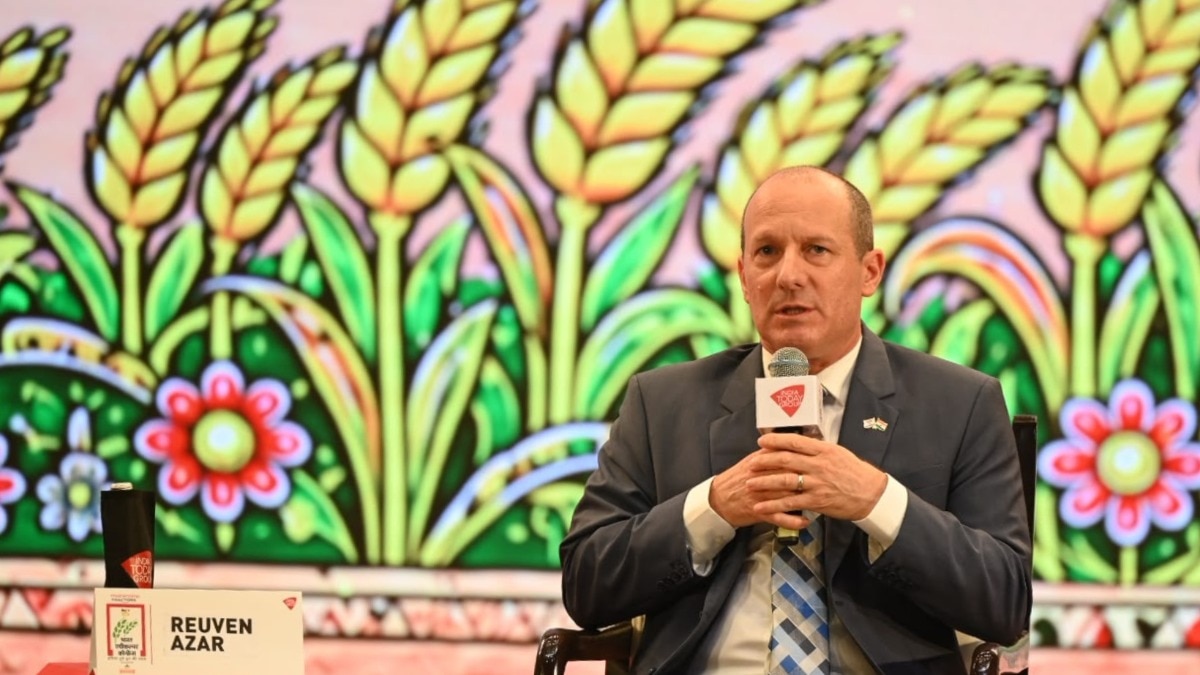
India's expanding solar energy sector could potentially threaten food security in the near future as agricultural land is diverted towards electricity production. However, a promising solution has been proposed by Israel's Ambassador to India, Reuven Azar, at the Kisan Tak Bharat Agriculture Conference in New Delhi. The Israeli envoy suggested an innovative system called agrivoltaics, which allows farmers to grow crops and generate solar electricity on the same land without compromising agricultural productivity or farm income. This technology has already been tested in several countries, including Israel, with over 50 crops capable of being cultivated alongside solar panels. The Indian government is also exploring this approach, with 36 operational projects generating 37.54 MW of electricity as of August 2025, and a Centre of Excellence for Agrivoltaics established at the National Institute of Solar Energy and the Indian Agricultural Research Institute. The concern arises from the competition between solar energy projects and farmland, with agricultural land already facing diversion due to housing and infrastructure demands. As India accelerates its transition towards renewable energy, agrivoltaics could provide a sustainable solution for balancing food production and solar energy generation.
---
India's push for solar energy could lead to a conflict between electricity generation and food security as agricultural land is diverted for solar farms. Speaking at the Kisan Tak Bharat Agriculture Conference, Israeli Ambassador Reuven Azar proposed an innovative solution called agrivoltaics, which allows farmers to grow crops and generate solar electricity on the same land. The technology, already tested in countries like Israel, enables more than 50 crops to be cultivated alongside solar panels.
The Kisan Tak Bharat Agriculture Conference is being held at the Bharat Mandapam in New Delhi from November 10-11, with Prime Minister Narendra Modi scheduled to speak on November 12 at 8 pm. The Indian government has already taken steps towards adopting agrivoltaics, with 36 operational projects generating 37.54 MW of electricity as of August 2025.
The concern over agricultural land being diverted for energy generation arises from the growing competition between such non-conventional energy projects and farmland. Agrivoltaics could address this problem by allowing both activities to coexist on the same plot, potentially solving the conflict between food production and solar energy generation while providing farmers with an additional source of income.
---
As India accelerates its transition towards renewable energy, particularly solar power, competition for land is growing as both solar energy projects and agriculture require large areas. Israel's Ambassador to India, Reuven Azar, warned at the Kisan Tak Bharat Agriculture Conference that expanding solar farms could push up land prices and encourage farmers to lease their fields for electricity generation instead of cultivating crops. This could potentially lead to a problem for food security in the coming decade.
Agrivoltaics, a system in which solar panels are installed above or between crops, could provide a sustainable solution for balancing food production and solar energy generation. The technology has already been tested in countries like Israel, with over 140 sites approved by December 2024 under nationwide pilot initiatives. Israeli-developed technology has also been tested in Europe under the EU-funded REGACE project, allowing greenhouses to generate electricity while growing crops. India is experimenting with agrivoltaics at the Indian Agricultural Research Institute in New Delhi, where a 100-kW pilot project combines solar electricity generation with crop cultivation.