Beaver Dam Analogues Boost Coho Salmon Survival in California's Drought-Prone Regions
A groundbreaking restoration project in northern California has demonstrated the potential of replicating beaver dams, known as beaver dam analogues (BDAs), to improve conditions for threatened coho…
By News Rush Point Desk
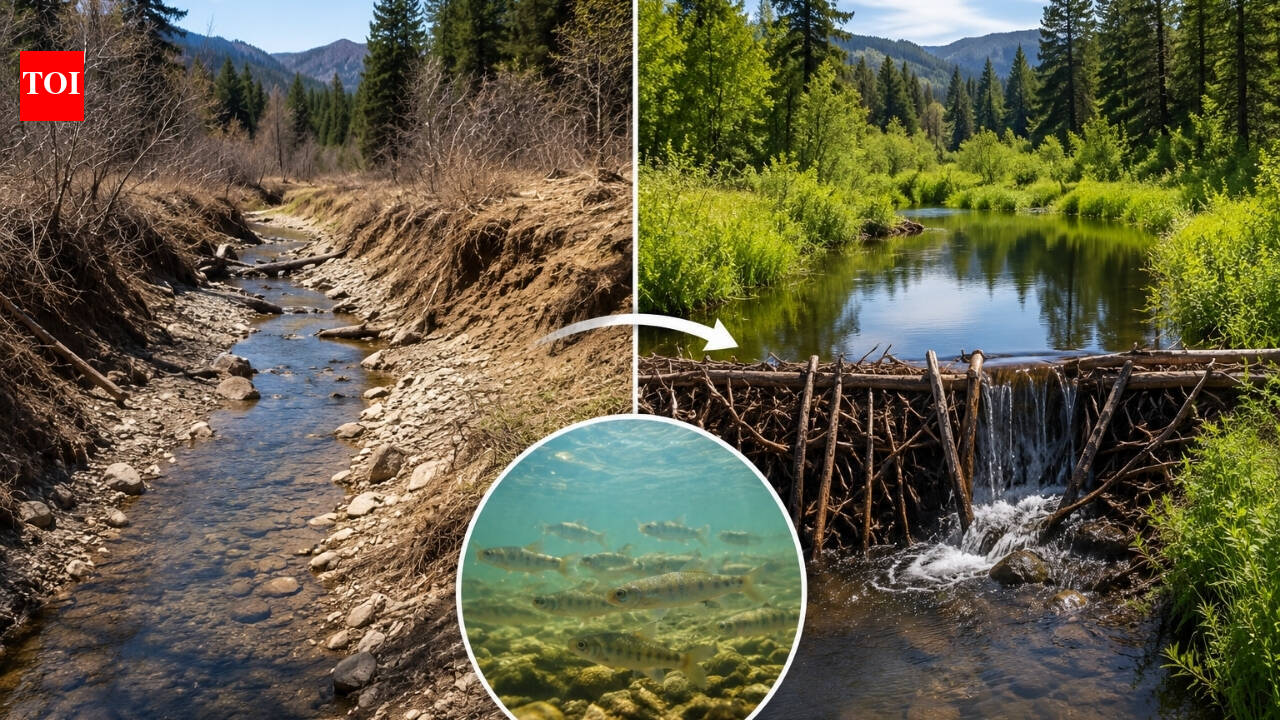
A groundbreaking restoration project in northern California has demonstrated the potential of replicating beaver dams, known as beaver dam analogues (BDAs), to improve conditions for threatened coho salmon during droughts. According to a July 2026 study published in Frontiers in Ecology and Evolution, the installation of BDAs increased juvenile coho salmon survival from an average of 8% before restoration to 60% after at one restored creek site. The research focused on Sugar Creek and French Creek, two tributaries of the Scott River in California's Klamath River watershed, which historically supported extensive beaver-created wetlands. However, widespread beaver trapping in the 19th century depleted the local beaver population and left the landscape largely devoid of its former wetlands. In response, researchers and restoration groups turned to human-built BDAs to mimic some of the ecological functions of natural beaver dams without requiring beavers to construct them. The first major BDA restoration took place in Sugar Creek in 2015, followed by an expansion to French Creek in 2018 after promising results from Sugar Creek. The restored areas significantly increased available habitat for young salmon, with Sugar Creek gaining approximately 7,080 square meters and French Creek another 1,858 square meters. The most striking finding was a significant increase in juvenile coho salmon survival rates post-restoration. In French Creek, mean survival rose from 8% to 60%, while in Sugar Creek, it increased to 55%. Survival rates varied across individual years and locations, ranging from 6% to 90%. The researchers found that survival tended to be higher when conditions were cooler and wetter. The improvements are crucial because young coho salmon must survive the warm and dry part of the year before migrating to the sea. By slowing water and creating additional wetted habitat, BDAs provided advantages for the species by maintaining cooler, more persistent habitats during droughts. The study found that restoration was associated not only with higher juvenile survival but also with increased adult coho salmon returns, potentially muting the apparent effect of drought on returning adults. These findings highlight the potential of BDAs as a tool for conserving cold-water fish populations in regions vulnerable to warm and dry conditions, such as California's Scott River watershed. The study provides valuable insights into the role that beaver dam analogues can play in creating more resilient ecosystems capable of withstanding droughts.
Filed underIndia
More stories
India
St. Louis Drummer Bobby Taylor Passes Away After Long Cancer Battle
India
Daily Astrology Love Horoscope: Zodiac Insights on Romance for November 10, 2026
India
Retired Electrician Wins Inheritance Battle After Murder Accusation Overturned
India
Sustainable Diwali Decor: Revamp Your Home with Zero-Waste Ideas
India
Jeff Bezos Upgrades Miami Mansion as $234M Billionaire Bunker Dream Home Takes Shape
India