Ancient Shark Graveyard Unearthed in Egypt Yields Five Extinct Species from Age of Dinosaurs
A barren stretch of Egypt's Western Desert, now an arid landscape, has revealed an unexpected glimpse into a prehistoric ocean.
By News Rush Point Desk
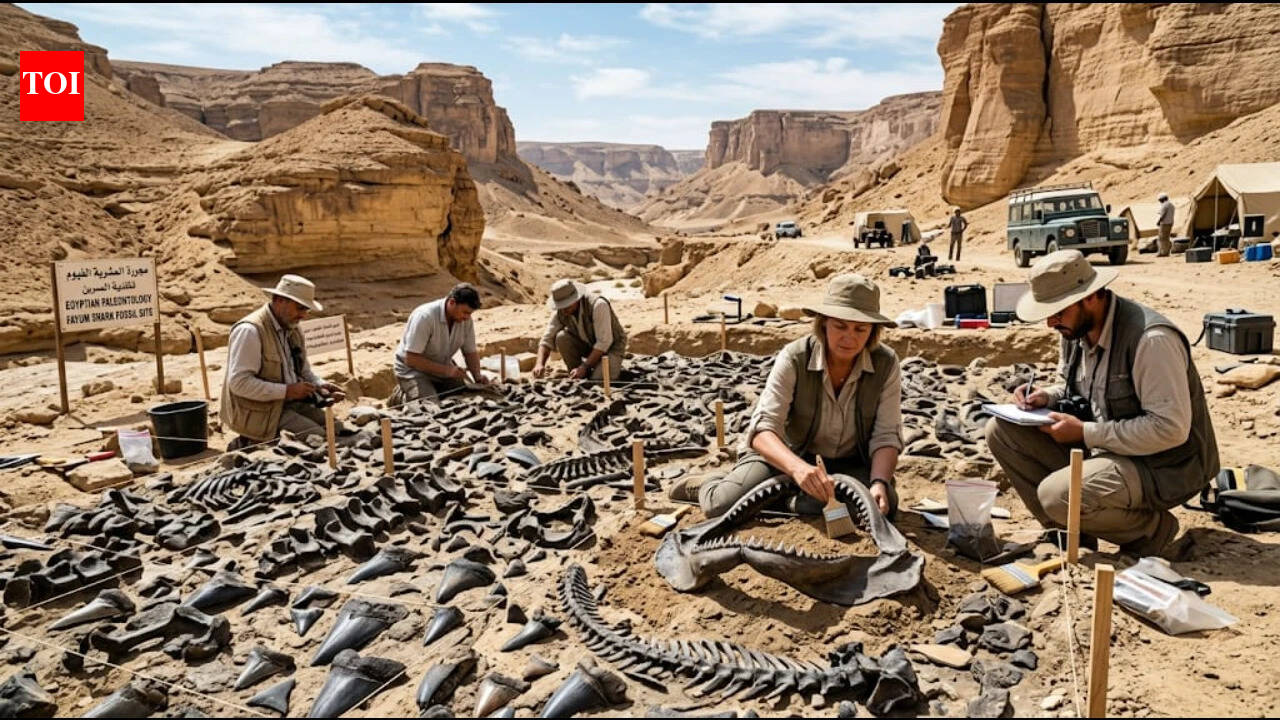
A barren stretch of Egypt's Western Desert, now an arid landscape, has revealed an unexpected glimpse into a prehistoric ocean. Scientists, led by Tarek Yassin of Cairo University, discovered fossilized shark teeth belonging to five extinct species that lived during the Late Cretaceous, when dinosaurs still dominated the planet. The discovery comes from the Abu-Tartur Plateau in southwestern Egypt, an area once covered by a warm tropical sea. The study published in 2026, titled 'Egyptian shark graveyard: New Late Cretaceous Lamniform shark assemblage from Duwi Formation of Abu-Tartur Area, Southwestern Desert, Egypt,' describes a new assemblage of Late Cretaceous lamniform sharks from the phosphate-rich Duwi Formation. The fossils provide evidence of shark diversity in the ancient tropical seas of North Africa during the Campanian stage of the Late Cretaceous, roughly 83.6 to 72.1 million years ago. Fourteen isolated lamniform teeth, commonly preserved parts of ancient sharks, were recovered from phosphate beds in the Maghrabi-Liffiya section. The researchers identified five extinct species: Cretalamna cf. C. maroccana, Scapanorhynchus cf. S. raphiodon, Serratolamna cf. S. serrata, Squalicorax bassanii, and Squalicorax pristodontus. The discovery significantly expands the known geographical record of these prehistoric sharks, with some species being reported from the Abu-Tartur area for the first time, like Serratolamna cf. S. serrata and Squalicorax bassanii, representing first records for Egypt. One finding, Scapanorhynchus cf. S. raphiodon, may represent the first occurrence of this taxon in Africa, making it especially significant. The fossils serve as a reminder that Egypt's deserts conceal an extensive record of vanished marine environments.
Filed underIndia
More stories
India
St. Louis Drummer Bobby Taylor Passes Away After Long Cancer Battle
India
Daily Astrology Love Horoscope: Zodiac Insights on Romance for November 10, 2026
India
Retired Electrician Wins Inheritance Battle After Murder Accusation Overturned
India
Sustainable Diwali Decor: Revamp Your Home with Zero-Waste Ideas
India
Jeff Bezos Upgrades Miami Mansion as $234M Billionaire Bunker Dream Home Takes Shape
India